

Trump Care Health Insurance Reform Model Returns approximately $24,000 Annually to the Average American Family
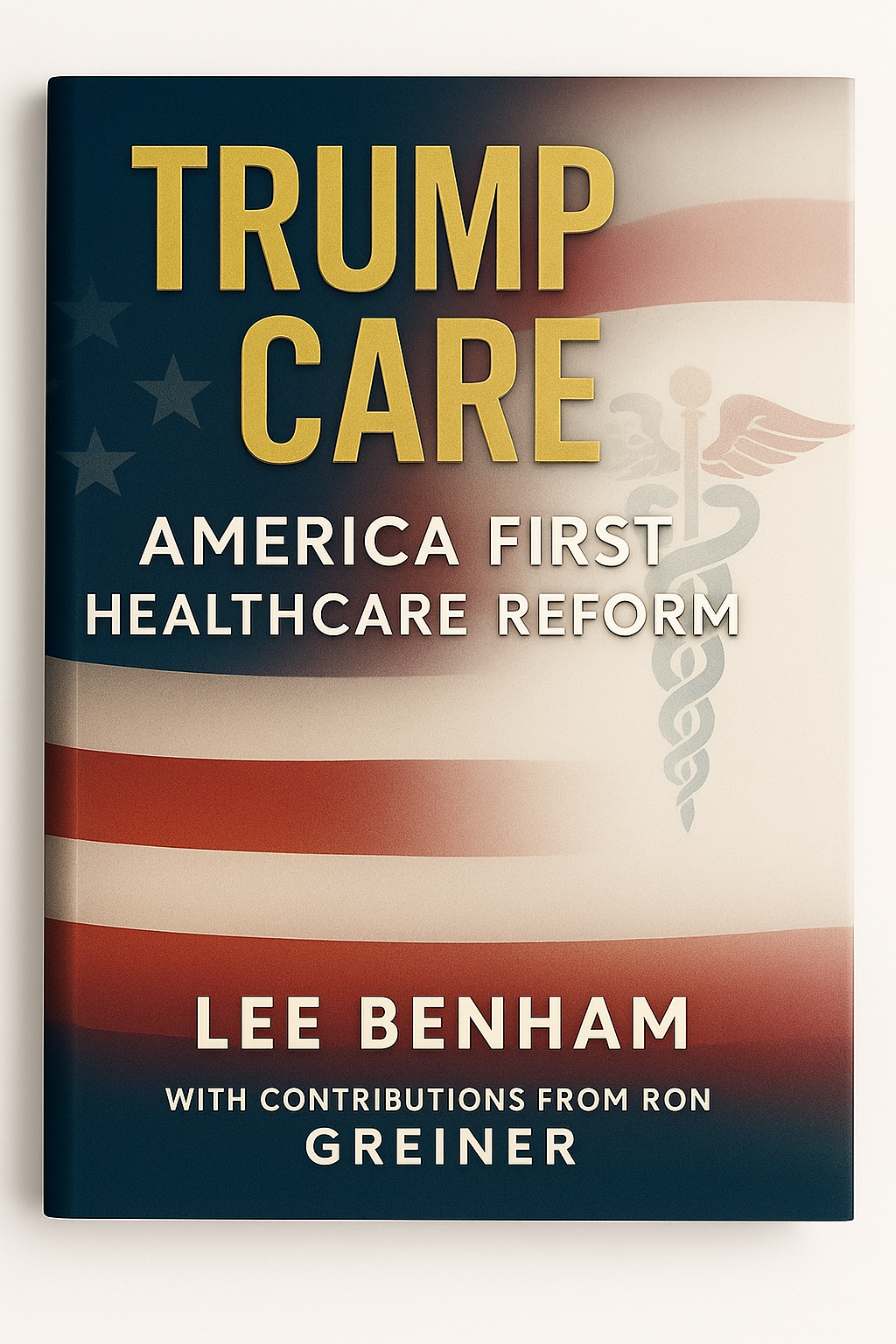
Trumpcare Age-Based-Tax credits
New Book Outlines “TrumpCare” Health Insurance Reform Model Projected to Return Up to $24,000 Annually to the Average American Family
This book documents how health insurance costs are currently embedded in wages and payroll systems, and how a voluntary shift to age-based tax credits shifts the flow of money back to the employee”
BELLEVUE, NE, UNITED STATES, January 8, 2026 /EINPresswire.com/ -- A newly released policy book, TrumpCare, presents a detailed framework for a voluntary restructuring of the U.S. health insurance financing system that its author says could reduce federal healthcare spending by trillions of dollars over time while increasing take-home income for American households.— Lee Benham
Written by insurance professional Lee Benham, TrumpCare outlines an alternative approach to employer-sponsored health insurance (ESI) and income-based Affordable Care Act (ACA) subsidies through the use of flat, age-based health insurance tax credits paired with individually owned Health Savings Accounts (HSAs).
According to the analysis presented in the book, once fully implemented and widely adopted on a voluntary basis, the model could result in the average family of four retaining approximately $24,000 per year in additional income, primarily through the elimination of employer-sponsored insurance premiums currently embedded in wages and payroll deductions.
Background: Employer-Sponsored Insurance Costs
Employer-sponsored health insurance remains the dominant source of coverage in the United States, covering approximately 160 million Americans. However, total annual costs for family coverage now routinely exceed $35,000 to $40,000 per year, according to employer benefit surveys.
While employers often characterize health coverage as a benefit, economists broadly agree that the full cost of employer-sponsored insurance is borne by employees through reduced wages, limited salary growth, and payroll deductions. These costs are largely invisible to workers, as they do not appear as line-item deductions equivalent to other forms of compensation.
In addition, employer-sponsored insurance is supported by the largest tax exclusion in the federal tax code, which excludes employer-paid health insurance premiums from taxable income. This exclusion is estimated to reduce federal revenue by more than $300 billion annually.
Overview of the TrumpCare Model
The TrumpCare framework described in the book introduces a voluntary, parallel system that does not mandate the elimination of existing coverage options. Instead, it allows individuals to opt out of employer-sponsored insurance, ACA plans, or Medicaid if they choose, and instead receive a fixed, refundable tax credit based solely on age.
Under the model:
Individuals under age 30 receive an annual health insurance tax credit of approximately $3,000
Beginning at age 31, the credit increases by $100 per year of age
Individuals aged 60–64 receive credits of approximately $6,000 to $6,400
The credits are not income-based and are available regardless of employment status. Individuals may apply the credit to purchase any state-authorized health insurance plan. If the selected plan costs less than the available credit, the unused portion is automatically deposited into the individual’s Health Savings Account.
Participation is optional, and existing programs—including employer-sponsored insurance, ACA marketplace plans, and Medicaid—remain available to those who prefer to stay enrolled.
Projected Household Income Effects
According to the analysis presented in TrumpCare, the largest direct financial impact on households would come from the removal of employer-sponsored insurance costs from compensation structures.
In the current system, the total cost of a typical family health plan—often exceeding $35,000 annually—is funded through a combination of direct payroll deductions and suppressed wages. When employers no longer administer health insurance, those funds are projected to return to workers in the form of higher wages, defined contributions, or reduced compensation offsets.
Based on national averages, the TrumpCare model estimates that a family of four could retain approximately $24,000 per year in additional income once the system is fully implemented and employer-sponsored insurance is broadly replaced on a voluntary basis.
This figure reflects:
Elimination of hidden premium costs embedded in wages
Removal of payroll deductions for employer-sponsored insurance
Increased wage transparency as employers exit the role of health plan sponsor
Federal and Employer Savings
The book also outlines projected long-term savings at the federal and employer levels.
At the federal level, savings are attributed to:
Gradual elimination of the employer health insurance tax exclusion
Replacement of income-based ACA subsidies with fixed, predictable credits
Reduced Medicaid enrollment as individuals voluntarily transition to private coverage
Capped federal exposure per person through defined credits
The book estimates that, over time, these changes could reduce federal healthcare-related expenditures by several trillion dollars over a ten-year period, depending on adoption rates.
Employers—including private businesses and public-sector entities—would no longer be responsible for administering health insurance plans. State and local governments, which often spend $35,000 or more per family for employee coverage, would be able to redirect funds toward wages, retirement benefits, or other budget priorities.
Health Savings Accounts and Long-Term Effects
A central feature of the TrumpCare model is the automatic deposit of unused tax credit funds into individually owned Health Savings Accounts. These accounts are designed to roll over annually and grow tax-free when used for qualified medical expenses.
According to the book, long-term accumulation of HSA balances could allow individuals and families to build significant healthcare reserves over time, particularly for retirement medical expenses.
The model positions HSAs as a mechanism for transforming healthcare spending from an annual expense into a long-term personal asset, rather than a recurring premium payment.
Legislative and Policy Context
The TrumpCare framework is designed to operate within existing legal structures and includes pathways for implementation through federal legislation, budget reconciliation, or state-based innovation waivers under Section 1332 of the Affordable Care Act.
The book emphasizes that no mandates are required to drive adoption. Instead, the transition away from employer-sponsored insurance is projected to occur gradually as individuals and employers voluntarily choose alternative arrangements based on cost and flexibility.
About the Author and the Book
Lee Benham has more than three decades of experience in the health insurance industry and has worked with employer plans, individual coverage, Medicare, and Health Savings Account–based models. He was involved in early implementation of Medicare Medical Savings Account plans and has advised clients on alternative insurance structures.
TrumpCare is available in paperback and digital formats and is intended as a policy analysis resource for lawmakers, employers, insurers, and the general public.
Lee Benham
Lee Benham
+1 402-312-4555
email us here
Visit us on social media:
YouTube
How aged base tax credits work
Legal Disclaimer:
EIN Presswire provides this news content "as is" without warranty of any kind. We do not accept any responsibility or liability for the accuracy, content, images, videos, licenses, completeness, legality, or reliability of the information contained in this article. If you have any complaints or copyright issues related to this article, kindly contact the author above.
